


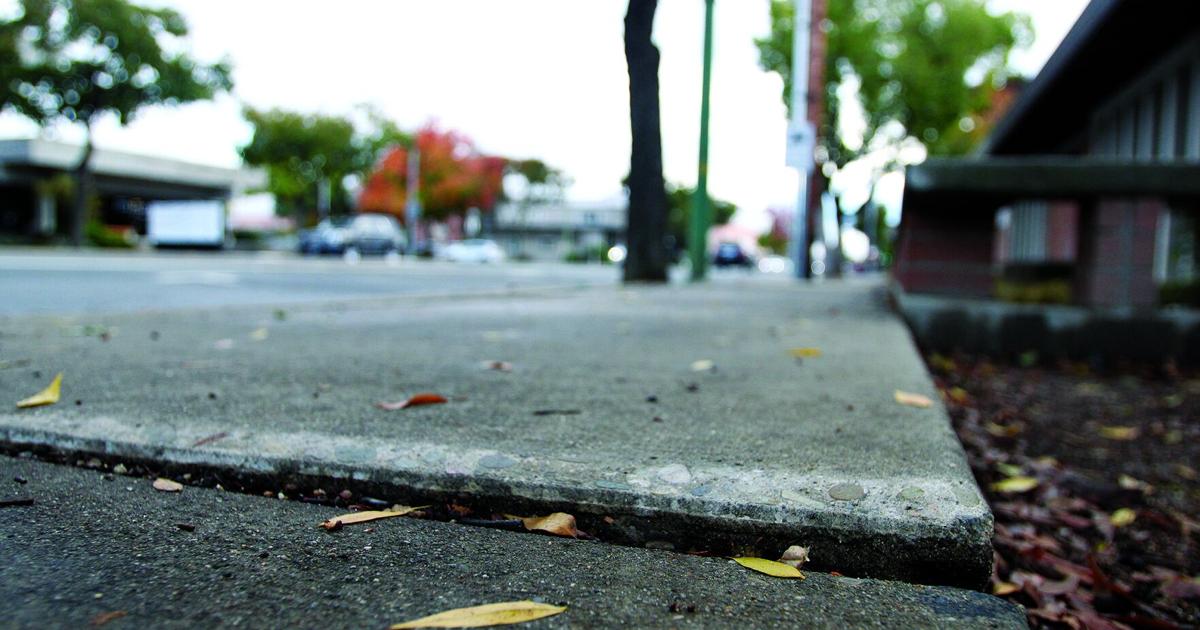
Relief may be on the way for property owners who want to make improvements to their property but are shocked to learn that they will also have to pay for repairs and upgrades to the curb, gutter and sidewalks in front.
The city council is considering changing its policy that currently requires property owners to foot the entire bill for repairs, with only a few exceptions. The matter was discussed at Wednesday night’s council meeting where several changes were suggested. The council ultimately directed city staff to come back at a future meeting with specific recommendations.
Suggested changes include a 50-50 split between the city and property owners for certain improvements that now require owners to pay 100% of the cost. Another possible change is raising the project value threshold from $75,400 to $150,000 before it triggers curb, gutter, and sidewalk improvements. “The majority of residential and commercial remodels in the city have a construction value greater than $75,400 and are therefore required to reconstruct older frontage improvements that do not meet current city standards,” according to Acting City Manager James Lindsey.
“The purpose of the section is to have property owners gradually improve the frontages of their property (curbs, gutters, and sidewalks) to current standards at the time they are improving their property,” he says.
Councilwoman Lisa Craig-Hensley says she proposed the 50-50 split for low-income homeowners who make improvements to their properties that will trigger street-front repairs. She also says the problem affects owners who want to make tenant improvements, but the project value will trigger “major ADA repairs.”
matter was raised because it has been an ongoing issue with homeowners who receive dunning letters telling them to “fix it, or else.” She says so many people in the Heritage District, for example, simply don’t have the money to pay for sidewalk repairs they’re now required to do.
Council members also expressed concern about the communications process that alerts property owners about the potential additional costs for their project. There was also a discussion about possibly exempting certain property improvements from the frontage improvement requirement, specifically solar installations. Council members say homeowners have complained to them about having to do sidewalk repairs when their solar panel installation projects have nothing to do with the street or sidewalks.
Another recommendation was to extend the timeline for owners to complete frontage improvements that they are required to do. Currently, the frontage work has to be completed at the same time as the other site improvements.
City staff says trip-and-fall claims against California cities have “sharply increased,” and many of the claims arise from people tripping over sidewalk offsets. “Addressing sidewalk trip and fall hazards should continue to be a high priority for the city,” says staff.
Lodi belongs to the California Joint Powers Risk Management Authority (CJPRMA), a member directed risk management pool which currently includes 15 cities. The Authority has reported 32 sidewalk cases over the past seven years, for a total incurred loss of $21.4 million.
Trees are usually the main culprit when sections of sidewalk and curbs and driveways raise up, creating an “offset.” The current policy, adopted in 2006, says the city will grind or temporarily patch sidewalk offsets up to 1.5 inches, up to three times, at no cost to the property owner. However, the owner is responsible for the entire cost in cases where the offset exceeds an inch-and-a-half.
When the offset is a result of trees within the public right-of-way, the city pays for all of the repairs. The city will waive permit and administrative fees for property owners who undertake maintenance/replacement without formal notice. However, fees apply in cases where the city (or its contractor) does the work and processes formal notices.
Additionally, the city could expand their payment program for property owners who need it. The city will currently advance funds, without interest, for installation or maintenance if the property owner agrees to make payments over the course of 12 months and upon execution of a written payment agreement with the city.
There is also special consideration for low-income owners. The current policy says that owners who meet low-income eligibility per the city’s utility discount program (SHARE) “may elect to defer maintenance costs until transfer of ownership with execution of a payment agreement. Fixed interest on the amount owed shall be established at the then-current Local Agency Investment Fund rate and accumulated interest shall be capped at 100% of the principal.”
link