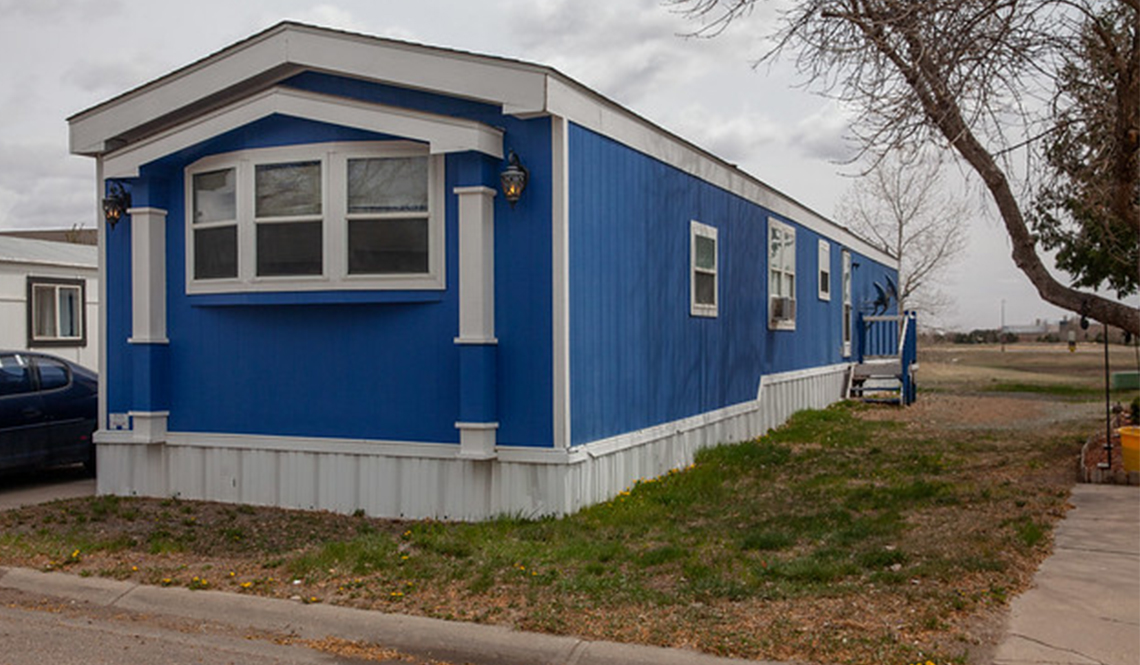
When that happens, Ward says she responds: “‘That’s where my grandmother lives. I’m the kind of person who lives in a mobile home park.’” (Ward spent much of her childhood living with her grandmother.) She adds that misconceptions about mobile home parks are not the realities.
“Especially in Colorado, you’ve got mountain views,” says Ward. “The mobile home parks are some of the only facilities that have swimming pools, including for folks who need physical therapy and an ADA-accessible pool. There are a lot of cool amenities, especially in the senior parks, where the residents are active and have walking and gardening clubs. The mobile home parks are much more community-oriented and neighborly than many of our other neighborhoods.”
The Results
1. Persistence Pays: “We were able to create a list of vendors willing to both do the work and spend their Saturdays with us teaching people and answering questions,” says Blomquist. Another benefit came from the project involving staff from several city departments. “For so many folks who work for the city, mobile home park residents are an audience they’ve been wanting to engage with for events, programs and services,” she adds.
2. Education and Empowerment: A workshop goal was to teach needed skills that could serve as confidence-builders. Results from the after-workshop participant survey indicate the goal was accomplished.
Amy, a workshop attendee in her early 50s, says her “eye-opening moment” came when she realized, “I can do something without having to call a plumber! I’m going to save money. I feel more confident in what I can do myself.”
Denise, a widow in her 60s, was feeling intimidated by her mobile home ownership: “We learned about the free home air and energy assessments that are available through Healthy Homes, CARE and Larimer County. They’ve been invaluable to me. They provided window caulking, radon testing, an air purifier and tips for keeping dust levels down. I wouldn’t have known how and where to sign up if I hadn’t attended a DIY session.”
Debbie, a former property manager, shared that she’s usually comfortable doing hands-on repairs. “I’m used to changing out my own light fixtures and light switches, and I thought I knew all there was to know about HVAC filters. Surprise! I learned more.”
3. Finding Funds: Roof repairs and new trailer-skirts are common home maintenance needs in the parks, and a disrepair violation for either can lead to eviction. Ward’s team quickly learned which repair tasks the residents could and couldn’t handle — or shouldn’t handle. Several workshop participants said something along the lines of, “I can replace the shingles, but I cannot get onto the roof myself.” Some of the city’s American Rescue Plan funds were used to provide mini-grants to participants for roof and skirting updates, and many of the contractors who taught the DIY workshops were hired to do the funded repairs. Says Blomquist: “It’s been cool to see the progression from the workshops to the partnerships, and to a repair project that’s happening just down the road.”
Advice for Replicating the Project


Among the workshop giveaways: box fans and air filters. An attendee praised the food table: “The great snacks helped make sure we didn’t have to leave in order to eat.”
Photo courtesy City of Fort Collins
1. Ask First, Act Later: “The best thing we did,” says Ward, “was talk to people before we set up the project to learn what the problems were so we could tailor the presentations to those topics.”
2. Screen the Vendors: “Make sure the experts you’re lining up have experience working on mobile homes,” advises Ward. “We had an energy efficiency person who didn’t. Our residents kept correcting him with comments like, “We need a different kind of evaporative cooler for a mobile home.’” Also, for many vendors, creating a PowerPoint or similar presentation is not in their wheelhouse since they typically don’t do workshops. Blomquist advises: “Make sure the presenters are both comfortable with the topic and talking in front of an audience.”
3. Know the Message and the Medium: “Our largest mobile home park for older adults has the lowest lot rent and some of our most vulnerable seniors live in the community,” Ward explains. “A lot of them don’t have a smartphone. They have little flip phones that don’t access the internet. A lot of the ways we traditionally market services and programs just don’t work for them. In our follow-up surveys asking how they heard about the workshops, many residents said it was word of mouth.” In the mobile home park where most of the residents speak Spanish, Ward understood that “they’re not going to the city’s web page for information or looking at emails, but they’re very active on WhatsApp. We received permission for one of our employees who works with that community to post a message. That’s how a lot of word spread there.”
4. Inject Fun! “Do as much as you can to incentivize,” says Ward. “The goodie bag was wildly popular. We even we played The Price Is Right music in between presentations and just made up silly little games to help give away additional prizes and keep everyone’s energy up during the event.”
link